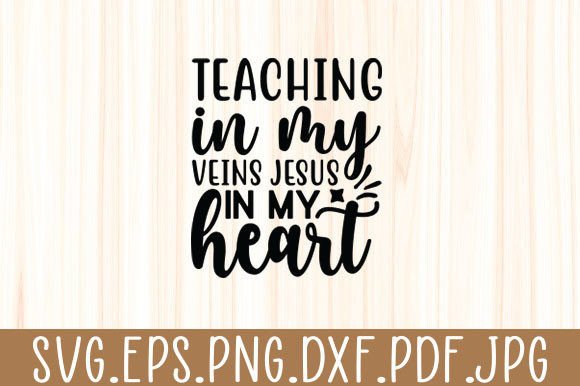
Teaching in My Veins Jesus in My Heart Design Review
As a designer who bridges the gap between digital graphics and tangible textiles, I approach every new file with a specific question: will this actually translate into a high-quality stitched product? When evaluating Teaching in My Veins Jesus in My Heart, my perspective shifts from simple aesthetics to structural integrity. While this asset is primarily marketed as a digital file for cutting machines like Cricut Explore, its bold typography and sentimental messaging make it a prime candidate for adaptation into machine embroidery design projects. For Etsy sellers and apparel decorators, understanding how this graphic behaves when converted to stitches is the difference between a professional finished product and a puckered mess.
Visual Personality and Emotional Resonance
The first impression of Teaching in My Veins Jesus in My Heart is one of steadfast dedication. The layout typically balances two distinct concepts—professional calling and spiritual foundation. Visually, this creates a natural hierarchy that works exceptionally well for custom apparel and personalized gifts. The phrase suggests a vertical or stacked arrangement, which is ideal for sweatshirt embroidery or tote bag designs where center-chest placement is standard.
From a design psychology standpoint, this graphic carries weight. It isn't merely decorative; it is declarative. When I look at this file, I see it belonging on a teacher’s weekender bag, a ministry leader’s denim jacket, or a retirement gift for an educator. The mood is warm yet authoritative. For craft business owners, this means the design has built-in niche appeal. It targets a specific demographic that values both their vocation and their faith, making it a safer bet for sales than generic religious or generic school-themed graphics. However, because the message is text-heavy, the font choice in your digitizing process will dictate the success of the final embroidery project.
Real-World Application: The Teacher Tote Test
To truly evaluate this asset, I mentally place it in a real-life scenario. Let’s imagine creating a canvas tote bag for a back-to-school collection. Canvas is a textured fabric that demands respect. If I were adapting Teaching in My Veins Jesus in My Heart for this purpose, I would immediately assess the line weight of the original graphic.
In a cutting file, lines can be infinitely thin. In embroidery, they cannot. For this tote bag, I would convert the main text elements into satin stitch columns rather than running stitch outlines. Satin stitches provide the sheen and coverage necessary to stand out against the nubby texture of canvas. The phrase "Jesus in My Heart" might benefit from a slightly softer, script-style fill stitch to contrast with the bolder, collegiate-style lettering often associated with "Teaching." This variation in stitch density adds visual interest and prevents the design from looking like a stiff block of thread.
For small shop products like this, durability is key. Teachers carry heavy loads. A design that relies solely on adhesive or light stitching will fail. By treating this graphic as a foundation for a dense, well-stabilized applique design or fully filled lettering, the resulting handmade product gains perceived value. Customers trust items that feel substantial. If the embroidery feels thin or gets lost in the fabric weave, the emotional impact of the message is diminished.
Navigating Fabric Variables and Hoop Constraints
While Teaching in My Veins Jesus in My Heart is versatile, it requires careful handling depending on the substrate. Not all fabrics are created equal, and this text-centric design exposes weaknesses in unstable materials.
- Stretchy Fabrics: On performance tees or stretchy knits, long horizontal lines of text can cause tunneling. You must use appropriate stabilizer, potentially a cut-away mesh, to maintain the shape of the letters during and after stitching.
- Dark Fabrics: If stitching white or light-colored thread on navy or black garments, verify your stitch density. Sparse fills will allow the dark fabric to show through, making the text look muddy. You may need to add an underlay or increase density specifically for dark backgrounds.
- Small Hoop Sizes: This design likely spans a significant width. Before committing to a 4x4 hoop, measure the aspect ratio. Shrinking a wide design to fit a small hoop often renders tiny lettering illegible. If you must size down, consider splitting the design into two separate hoopings or simplifying the secondary text elements.
- Curved Surfaces: Caps and sleeves present unique challenges. Horizontal text on a curved cap brim can distort. Always test the curvature compensation in your digitizing software before running a production batch.
I advise extreme caution with detailed corners and serifs if you plan to scale this design down for baby embroidery or sleeve cuffs. Intricate font details are the first casualties of resizing. If the original graphic has elaborate flourishes, simplify them for smaller applications to ensure stitch clarity.
Commercial Viability and Brand Consistency
For creative entrepreneurs and digital product sellers, consistency builds brand recognition. Using Teaching in My Veins Jesus in My Heart across multiple product lines—from printable mockups to physical embroidered patches—creates a cohesive shop aesthetic. However, you must ensure the translation remains faithful across mediums.
A common pitfall I observe in commercial embroidery is ignoring the relationship between the digital preview and the physical output. Your Etsy listing photos should accurately represent the stitch texture. If you use a flat vector image as your primary photo but ship a textured embroidered item, customers may feel misled. Take the time to create accurate digital embroidery file previews or stitch out samples for photography. This transparency increases buyer engagement and reduces return rates.
Furthermore, consider the licensing. Since this is an instant download file where nothing is mailed, you possess the digital asset immediately. However, always verify the commercial license terms included with Teaching in My Veins Jesus in My Heart. Confirm whether you are permitted to sell finished physical products, digital embroidery files derived from the art, or both. Protecting your business starts with respecting intellectual property rights.
Essential Designer Notes for Success
Before loading this design into your machine for a client project or inventory stock, run through this practical checklist. These steps save thread, time, and reputation.
- Test on Scrap Fabric First: Never assume settings transfer perfectly between fabric types. Stitch a sample on the exact material you intend to use for the final product.
- Check Thread Color Contrast: View your thread selection in natural lighting. What looks good on a screen may lack contrast on actual fabric. High contrast ensures readability for text-based designs.
- Review Stitch Density: Inspect the file in your editing software. Look for areas where stitches overlap excessively, which can cause needle breaks or fabric distortion.
- Confirm Hoop Size Compatibility: Measure the design dimensions against your available hoops. Leave adequate margin for the hoop frame itself.
- Inspect Small Details: Zoom in to 200% or higher. Ensure no individual stitch segments are shorter than your machine’s minimum jump stitch threshold.
- Mockup Testing: Create black and white mockups to check value balance. If the design reads well in grayscale, it will likely have strong visual hierarchy in color.
- Stabilizer Selection: Match the stabilizer weight to the fabric and design density. Heavier text designs on light fabrics require robust support.
Ultimately, Teaching in My Veins Jesus in My Heart offers a powerful narrative for makers. Whether you are producing holiday embroidery for church staff or everyday custom apparel for educators, the success lies in technical execution. Treat the graphic not just as art, but as a blueprint for construction. By respecting the limitations of thread and fabric, you transform a simple digital download into a cherished, professional-grade keepsake that honors both the craft and the message.